
When Constipation Started, I Looked for Something to Take
What do you reach for when you’re constipated?
For many people, probiotics are one of the first things that come to mind.
Then come prebiotics.
Fiber supplements.
Magnesium.
Psyllium husk.
Maybe yogurt or another product promising better gut health.
I understand that impulse because I did it too.
There was a period when I followed a very low-carb, high-fat diet.
As the composition of my meals changed, so did my bowel movements.
I became constipated.
And my first question was:
“What can I take for this?”
I tried probiotics.
I tried magnesium.
I tried psyllium husk.
When I was uncomfortable, I looked for something else to add.
For a long time, I thought I was solving a constipation problem.
Eventually, I realized I had barely looked at something much more ordinary:
what I was eating every day.
My Question Changed From “What Should I Take?” to “What Am I Eating?”
Over time, the way I ate began to change.
I stopped building my meals around extreme restriction.
Instead, I started paying more attention to the food itself.
More vegetables.
More variety.
More whole and minimally processed foods.
And not just occasionally.
They became part of the way I ate every day.
My bowel movements changed too.
That experience changed my question.
Before, I asked:
“What else should I take?”
Now I ask:
“What am I actually eating every day?”
Those questions sound similar.
They aren’t.
The first sends me looking outside my daily life for another solution.
The second makes me look at what I have been repeating.
Probiotics Aren’t the Real Question
This isn’t an argument against probiotics.
Research suggests that some probiotic products may improve bowel movement frequency or other symptoms in some adults with functional constipation.
But the results vary between studies and products, and the certainty of evidence for some outcomes remains limited.
So my question isn’t:
“Are probiotics good or bad?”
It’s:
“Why am I looking for something to add before I look at what may be missing from my everyday meals?”
A supplement can supplement something.
That’s different from asking it to replace the foundation.
When constipation shows up, diet is one of the basic places worth looking.
The National Institute of Diabetes and Digestive and Kidney Diseases (NIDDK) recommends getting enough fiber and fluids and being physically active as part of preventing or relieving constipation.
That sounds simple.
But “eat more fiber” can easily become another product.
And “eat more vegetables” can become something we technically do without really changing the way we eat.
That’s why I stopped thinking only in terms of nutrients.
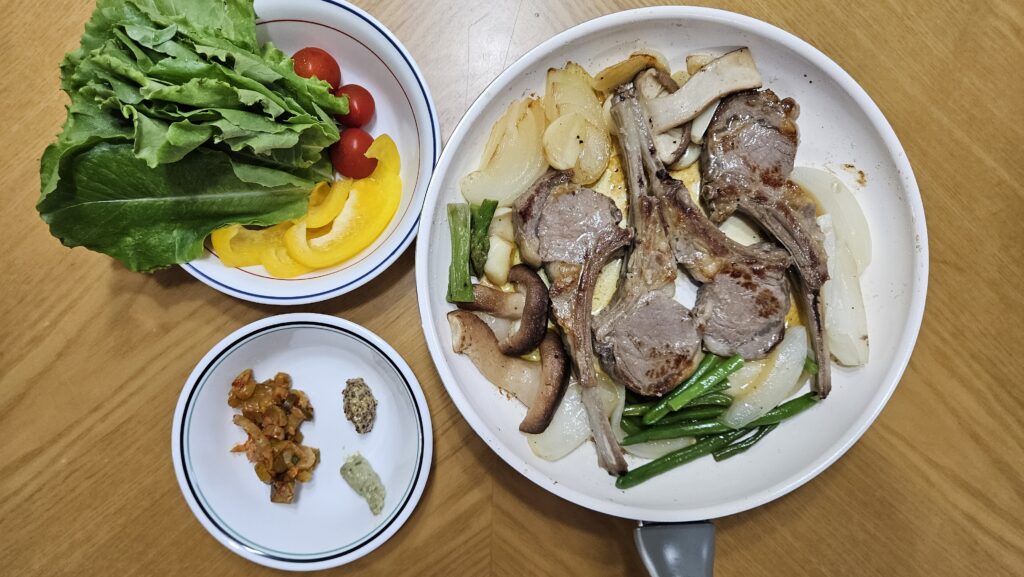
I started looking at my table.

Healthy Eating Can Quietly Become a Shopping List
There’s something strange about modern healthy eating.
Worried about gut health?
Buy probiotics.
Think you need more fiber?
Buy a fiber supplement.
Trying to lose weight?
Add more protein.
Too busy for breakfast?
Drink it.
Feel like you aren’t eating enough vegetables?
Find a product that promises to put them into something convenient.
And when that doesn’t feel like enough?
Add something else.
I began wondering:
When did taking care of my health become mostly about adding things?
Meanwhile, much simpler questions can disappear.
What does my usual plate actually look like?
How much variety am I eating?
Where is my fiber coming from?
Am I drinking enough?
Am I moving?
And perhaps most basically:
Am I eating, digesting, and eliminating comfortably?
“Eat More Fiber” Doesn’t Have to Mean “Buy More Fiber”
Fiber matters for bowel health.
But fiber isn’t found only in a container labeled “fiber.”
Whole grains.
Beans and lentils.
Vegetables.
Fruit.
Nuts.
These are all food sources of fiber.
NIDDK also notes that fiber should generally be increased gradually, with adequate liquids.
That distinction became important to me.
I didn’t want my diet to become a collection of isolated nutrients.
Protein from one product.
Fiber from another.
Something for gut health.
Something for blood sugar.
Something else for weight loss.
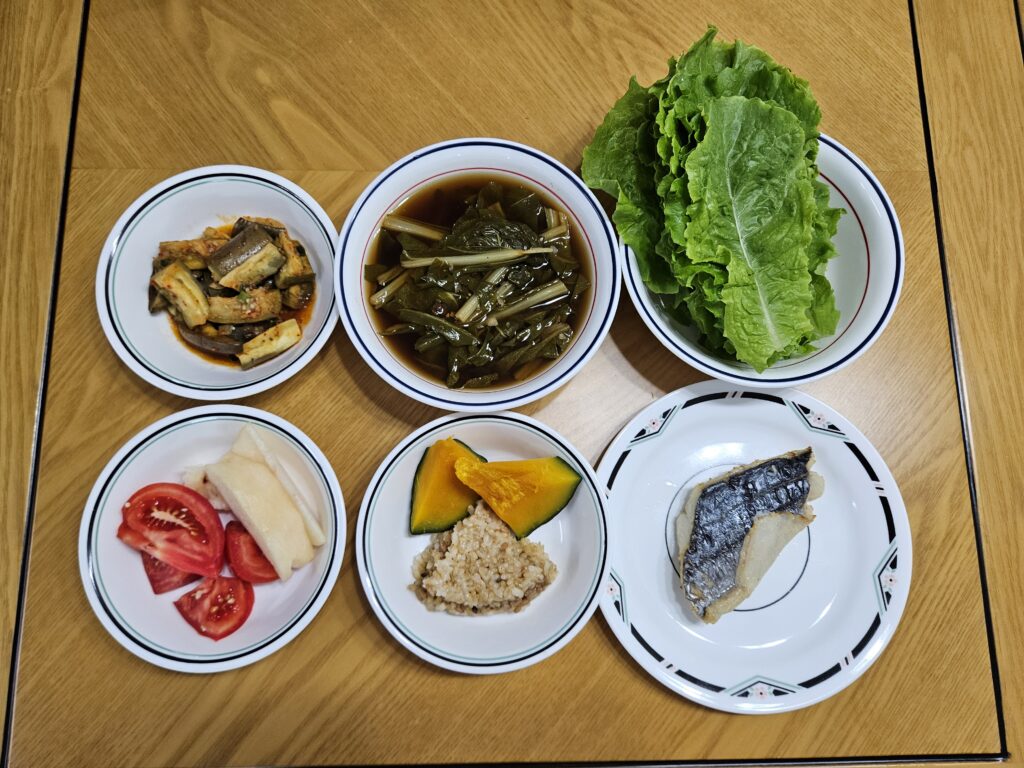
I wanted to see food again.
Not a perfect diet.
Not an enormous salad at every meal.
A real table with real food, repeated often enough to become ordinary.
Constipation Is More Than How Often You Go
Constipation isn’t simply “I didn’t go today.”
It can include having fewer bowel movements than usual, hard or dry stools, difficulty passing stool, or feeling that you haven’t emptied completely.
And what’s normal isn’t identical for everyone.
That changed the way I watched my own body.
I stopped asking whether I had achieved the “correct” number of bowel movements.
Instead, I paid attention to changes in my usual pattern.
Has going to the bathroom become more difficult?
Has the stool changed?
Did my diet change?
Have I been drinking less?
Have I been moving less?
What has been different lately?
Because bowel habits don’t exist separately from the rest of life.
Changes in what and how much we eat, hydration, physical activity, medicines, health conditions, travel, and routine can all play a role in constipation.
That made bowel movements something more useful to me than a number.
They became another Body Signal.
What I Look at Before I Reach for Something Else
Today, if my bowel movements feel different from usual, I don’t immediately begin with:
“What should I take?”
I first look back over the past few days.
What have I actually been eating?
Has my diet become unusually repetitive?
Have vegetables and other whole foods quietly disappeared from my meals?
Have I been drinking enough?
Have I been moving?
What changed?
Sometimes there may be a straightforward answer.
Sometimes there isn’t.
And sometimes constipation needs medical evaluation rather than another dietary experiment.
Persistent constipation or constipation accompanied by rectal bleeding, blood in the stool, or ongoing abdominal pain should be discussed with a health professional.
But for my everyday life, the first question has changed.
From:
“What else should I take?”
to:
“What have I actually been eating?”
Sometimes We Try to Silence a Signal Before We Understand It
In the last DiaLife story, I wrote about feeling sleepy after eating.
For years, I treated that sleepiness as a problem to fix.
Coffee.
A snack.
Something sweet.
Eventually, I started asking what happened before the signal appeared.
Bowel movements taught me something similar.
Constipated?
Find something to make it go away.
That was how I used to think.
Now I am more interested in another question:
What changed before my body changed?
My food?
My water?
My movement?
My routine?
The signal doesn’t always tell me the answer.
But it gives me a reason to look.
That is why I no longer think of bowel movements as something that belongs only in the bathroom.
They are part of the conversation I have with my body.
Before You Add Something, Look at the Table
I still believe supplements can have a place.
So can probiotics.
So can fiber supplements.
And some people need treatments that go far beyond changing what they eat.
But I’ve stopped assuming that better health always begins by adding another thing.
Sometimes it begins by looking at what is already there.
Or what isn’t.
For me, constipation changed one very simple question.
“What should I take?”
became:
“What am I eating every day?”
That question brought me back to my table.
And my table told me much more about my habits than the bottles in my cabinet ever could.
Because before I try to fix the result,
I want to understand what I’ve been repeating.
Healthy Living Starts with You.
🌿 Today’s Reflection
Before you add something new for your health, take a look at what you’re already doing.
If your bowel movements have changed, ask:
What have I actually been eating lately?
Has my diet become repetitive?
Where is my fiber coming from?
Am I drinking enough?
Am I moving regularly?
And most importantly:
What changed before my body changed?
Sometimes the first step isn’t adding another solution.
It’s noticing what may have changed in the foundation.
🌿 Next Story
“Eat more vegetables.”
It sounds simple.
But what does that actually look like in real life?
A giant bowl of lettuce?
A packaged salad covered in dressing?
A banana and a sweet potato because they’re “healthy”?
A green powder added to a smoothie?
Over the years, I realized that eating vegetables and building meals around real, varied foods weren’t always the same thing.
So the next question became:
What does “eat more vegetables” actually mean on an everyday table?
That’s where we’ll go next.
Healthy Living Starts with You.
──────────────
📚 Continue Your DiaLife Journey
Every story begins with a single step.
- Healthy Living Starts with You
- Why DiaLife Is Different
- It’s Not About Losing Weight. It’s About Your Metabolism.
- Why Does the Same Meal Feel Different on Different Days?
- Why I Chose Low-Carb Clean Living Over Keto
- Your Body Remembers Patterns, Not Just Meals
- How I Lost 10 kg, Kept It Off for 8 Years—and Why I Started Watching My Blood Sugar
- Why Do I Get So Sleepy After Eating? Could Blood Sugar Be One Reason?
- Constipated? Before You Reach for Probiotics, Look at What You Eat (You’re here.)
──────────────
DiaLife Stories isn’t just a collection of health articles.
It’s the story of building a healthier life—one choice, one lesson, and one day at a time.
◇ DiaLife Wellness
Healthy Living Starts with You.
📚 References
National Institute of Diabetes and Digestive and Kidney Diseases (NIDDK)
Treatment for Constipation
NIDDK — Treatment for Constipation
National Institute of Diabetes and Digestive and Kidney Diseases (NIDDK)
Eating, Diet, & Nutrition for Constipation
NIDDK — Eating, Diet & Nutrition for Constipation
National Institute of Diabetes and Digestive and Kidney Diseases (NIDDK)
Symptoms & Causes of Constipation
NIDDK — Symptoms & Causes of Constipation
Systematic review and meta-analysis of probiotics-containing products in adults with functional constipation (2024)
PubMed — Probiotics and Functional Constipation