
Losing Weight Was Only the Beginning
Losing weight is hard.
Keeping it off can feel even harder.
I lost 10 kg.
And for more than eight years, I have maintained that weight loss.
But looking back, something about those eight years surprises me.
I didn’t spend them constantly trying to control my weight.
At some point, I started paying closer attention to a different number.
My blood sugar.
And it wasn’t because I thought blood sugar was a weight-loss trick.
I started paying attention because I didn’t want diabetes.
Before I lost the weight, a health screening showed that my blood sugar was in the prediabetes range, and I was advised to get further testing.
Diabetes was also something I had watched closely in my own family.
My mother lived with it for many years.
She watched what she ate.
She exercised.
She worked hard to manage it.
And yet, over time, managing it became more difficult.
Watching her left me with a question I couldn’t forget:
Why was it getting harder even when she was trying so hard?
After my mother passed away in 2019, that question became much more personal.
I didn’t simply want a lower number on the scale.
I didn’t want diabetes.
So instead of focusing only on how much I weighed, I started paying closer attention to what my blood sugar was doing.
At First, I Watched the Numbers Too
Blood sugar.
HbA1c.
Weight.
Body fat.
At first, I watched the numbers just like anyone else.
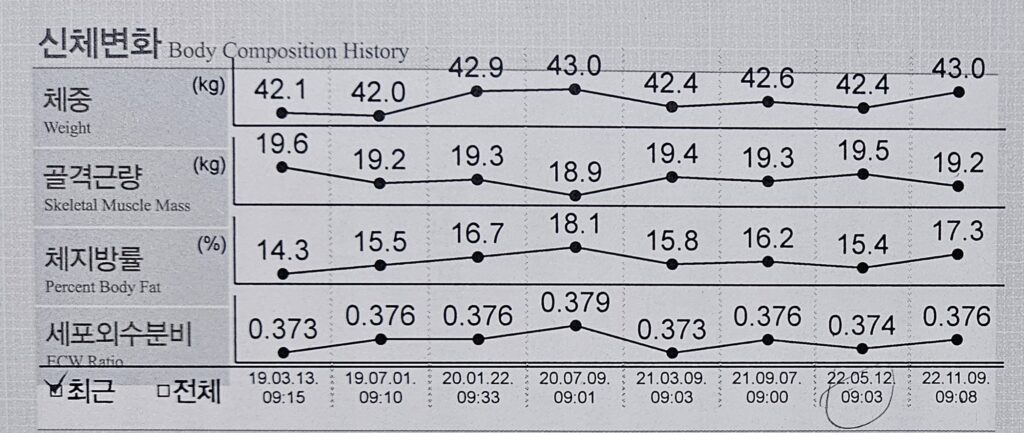
About every six months, I went to a public health center to check my body composition and other health markers.
After losing weight, my blood test in March 2019 showed a fasting blood glucose of 82 mg/dL and an HbA1c of 5.3%, both within the normal range.
That was reassuring.
But as the years passed, I became interested in something more useful than whether a single number was “good” or “bad.”
I started asking:
Why did I get this number?
What had I eaten?
How much had I eaten?
When had I moved?
What habits had I been repeating?
Instead of trying to change one number at a time, I started looking for what might be creating it.
Then My Habits Started to Change
Once I started asking why, my habits began to change one by one.
I paid more attention to the type and amount of carbohydrates I ate.
I became more selective about sauces and dressings.
When I had a choice, I gravitated toward foods with simpler ingredients and foods closer to their original form.
I tried to move after meals whenever I could.
If something seemed to work well for me, I kept doing it.
If it didn’t, I adjusted.
There was no single moment when I suddenly discovered the “perfect” way to eat.
It happened gradually.
Try something.
Watch how my body responds.
Adjust.
Repeat.
Years passed.
And eventually, I noticed something that surprised me.
I was no longer following an extreme diet.
I wasn’t spending every day fighting the number on the scale.
And yet my weight had remained remarkably stable.
I wasn’t chasing my weight anymore.
My habits had changed—and my weight had become more stable along with them.
That was an important shift for me.
When I was dieting, I used to ask:
“What should I eat to lose weight?”
Now I was more likely to ask:
“How will my body respond to this?”
When My Weight Went Up, I Didn’t Panic
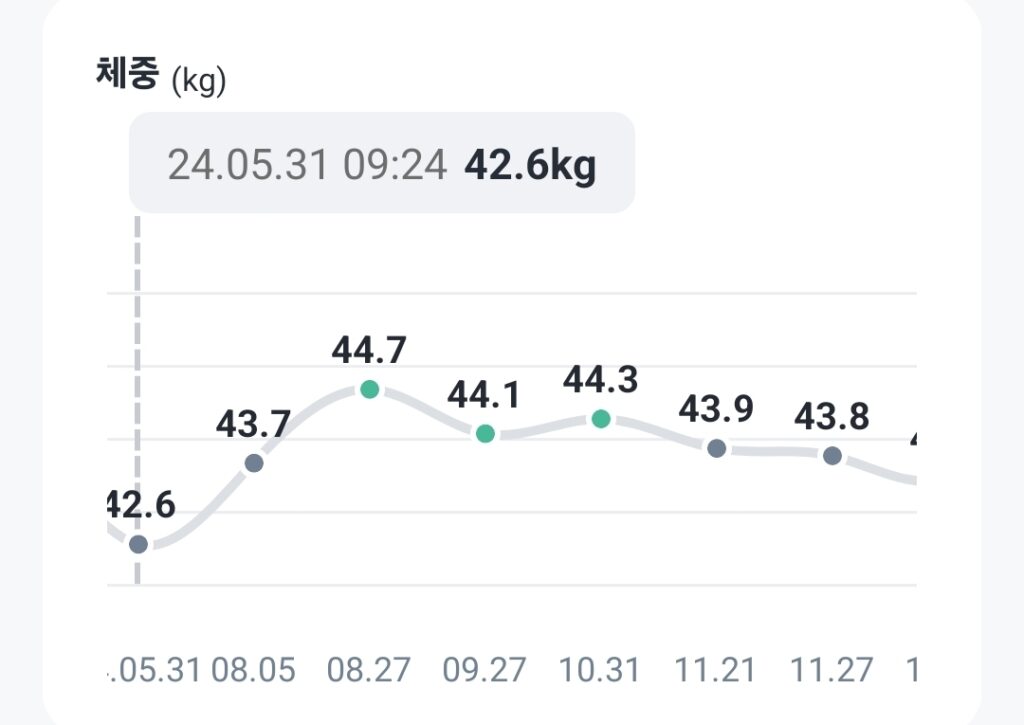
In 2024, I started strength training.
Within a relatively short period, my weight increased by more than 2 kg.
If I had looked only at the scale, I might have thought:
“I’m exercising. Why am I gaining weight?”
And I might have responded by eating less or exercising even more.
But instead of reacting to the number, I asked a different question:
Why did it change?
I looked at when I had started strength training.
I looked at changes in my body composition.
And I paid attention to what had changed in my habits.
A sudden increase on the scale doesn’t necessarily mean the same amount of body fat has been gained.
Starting a new strength-training routine can change muscle glycogen storage and the water stored with it, which can affect body weight in the short term.
So I didn’t immediately try to force the number back down.
The scale was showing me a result.
I needed to understand what might be behind it before deciding what to change.
I Learned to Recalculate the Route
This eventually changed the way I thought about maintaining weight.
I don’t expect myself to stay perfectly on course every day.
Sometimes I eat differently.
Sometimes my routine changes.
Sometimes the numbers move.
That doesn’t mean everything has failed.
I think of it like navigation.
If you take a wrong turn, your GPS doesn’t tell you to abandon the destination.
It simply checks where you are and says:
Recalculating.
That’s how I began to think about my body, too.
If I can recognize where I am, I can make an adjustment.
For me, maintaining my weight hasn’t meant never going off course.
It has meant learning to notice sooner and find my way back.
Are We Treating the Result Instead of Looking at What Came Before It?
When weight goes up, our first instinct may be to look for another way to lose it.
When the weight comes back after a diet, we search for another diet.
When digestion feels off, we search for something to eat that might fix it.
When our skin changes, we may reach for a new product or treatment.
Of course, these problems can have very different causes, and some require appropriate medical evaluation or treatment.
But before jumping immediately to another solution, I think there is another question worth asking:
What was happening before the result appeared?
What habits had I been repeating?
What had I been eating?
How had I been moving?
How had I been sleeping?
And what signals had my body already been sending me?
Blood Sugar Became One of My Body’s Signals
For me, blood sugar became one of those signals.
Once I started paying attention to it, I began looking more closely at my food.
Then my meals.
Then my movement.
And eventually, my habits as a whole.
That’s why, when I talk about managing blood sugar, I’m not simply talking about trying to make the number lower.
And I’m not talking only to people who already have diabetes.
Fasting blood sugar and post-meal blood sugar matter.
So does HbA1c.
But if I look only at the number, I may miss the habits and circumstances surrounding it.
Blood sugar became one way for me to observe how my body was responding to food, movement, and repeated habits.

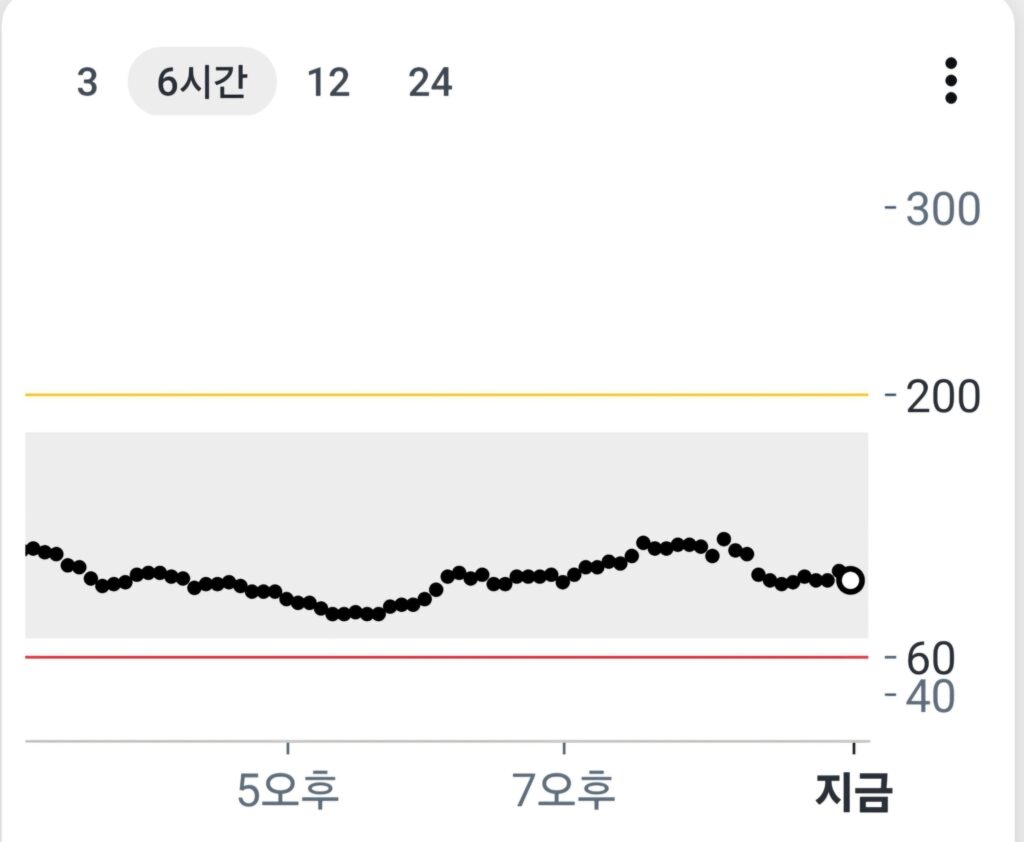
Later, wearing a Continuous Glucose Monitor (CGM) allowed me to see patterns that occasional finger-stick readings couldn’t show as clearly.
The same food didn’t always produce the same response.
The amount mattered.
How I ate mattered.
When I moved mattered.
So I gradually stopped asking only:
“Is this food good or bad for blood sugar?”
And started asking:
“How did my body respond?”
I Realized I Hadn’t Been Managing My Weight After All
I lost 10 kg.
And I have maintained that weight loss for more than eight years.
But when I look back, I don’t think the most important thing I did was spend eight years managing my weight.
I was doing something else.
Watching how my body responded.
Asking why.
Changing a habit.
Checking again.
And somewhere along the way, my weight became one of the outcomes.
That’s why a small change on the scale no longer makes me immediately think about eating less or starting another diet.
First, I ask:
Why did it change?
And if something has drifted off course?
I recalculate the route.
Weight is one result our bodies show us.
But long before that result appears, habits have been accumulating.
And our bodies may already have been sending signals.
So if you’ve regained weight, before searching for the next diet…
If you’re concerned about fasting or post-meal blood sugar, before simply making a longer list of foods to avoid…
Try looking at what has been happening repeatedly.
Your meals.
Your movement.
Your sleep.
Your habits.
And the signals your body has been sending along the way.
Sometimes the result isn’t the best place to begin.
🌿 Today’s Reflection
What number have you been trying to change?
Your weight?
Your fasting blood sugar?
Your post-meal blood sugar?
Instead of asking only,
“How do I make this number better?”
try asking:
“What habits might be creating this number?”
Sometimes, changing the question is where understanding begins.
🌿 Next Story
Blood sugar was one of the first signals I learned to pay attention to.
But it wasn’t the only one.
Sleepiness after a meal.
Hunger that returns too quickly.
Feeling full—or never quite feeling satisfied.
Digestion.
Energy.
Sleep.
Our bodies are communicating with us all day long.
But which signals are actually worth paying attention to?
And how do we learn to notice them without becoming obsessed with every little change?
In the next story, we’ll explore what I mean when I talk about “body signals”—and how I began learning to recognize my own.
Healthy Living Starts with You.
──────────────
📚 Continue Your DiaLife Journey
Every story begins with a single step.
- Healthy Living Starts with You
- Why DiaLife Is Different
- It’s Not About Losing Weight. It’s About Your Metabolism.
- Why Does the Same Meal Feel Different on Different Days?
- Why I Chose Low-Carb Clean Living Over Keto
- Your Body Remembers Patterns, Not Just Meals
- How I Lost 10 kg, Kept It Off for 8 Years—and Why I Started Watching My Blood Sugar (You’re here.)
DiaLife Stories isn’t just a collection of health articles.
It’s the story of building a healthier life—one choice, one lesson, and one day at a time.
◇ DiaLife Wellness
Healthy Living Starts with You.